Where Digital Was Still Being Invented
There is something special about being early. Not first, not the loudest, but early enough to be in the room when the rules are still being written. That is what Adversitement was for me; a front-row seat to the exponential growth of online marketing in the Netherlands, at exactly the moment when nobody quite knew yet what it could become.
Adversitement, DigitalPower and O2
The company operated under the Adversitement umbrella, with several labels beneath it, the most notable being DigitalPower and O2. Each had its own focus within the broader world of online marketing, but they shared the same entrepreneurial DNA: fast-moving, ambitious, and full of people who were building something new and figuring it out in real time. The client portfolio was a collection of start-ups and growing businesses but also Bol.com, and no two briefs were the same.
Learning by doing, at speed
This was not an environment where you waited to be told what to do. You picked things up, you tried them, you improved them. I worked across campaigns, digital content, client communications and event organisation, often several of those things on the same day. But beyond the day-to-day output, this period gave me something more valuable: a deep understanding of how digital actually works, from the inside out.
We were figuring out usability and design principles before the term UX had become common vocabulary. We ran A/B tests when most companies still trusted their gut. We mapped customer journeys when the concept was still new enough to need explaining. We dealt with the earliest debates around privacy, cookies, and tracking pixels at a time when nobody had written the rulebook yet, because the rulebook didn’t exist.
It was chaotic, exhilarating, and relentlessly educational. The kind of learning that only happens when an industry is inventing itself in real time, and you happen to be sitting at the table.
My first trade fair, from blank canvas to full experience
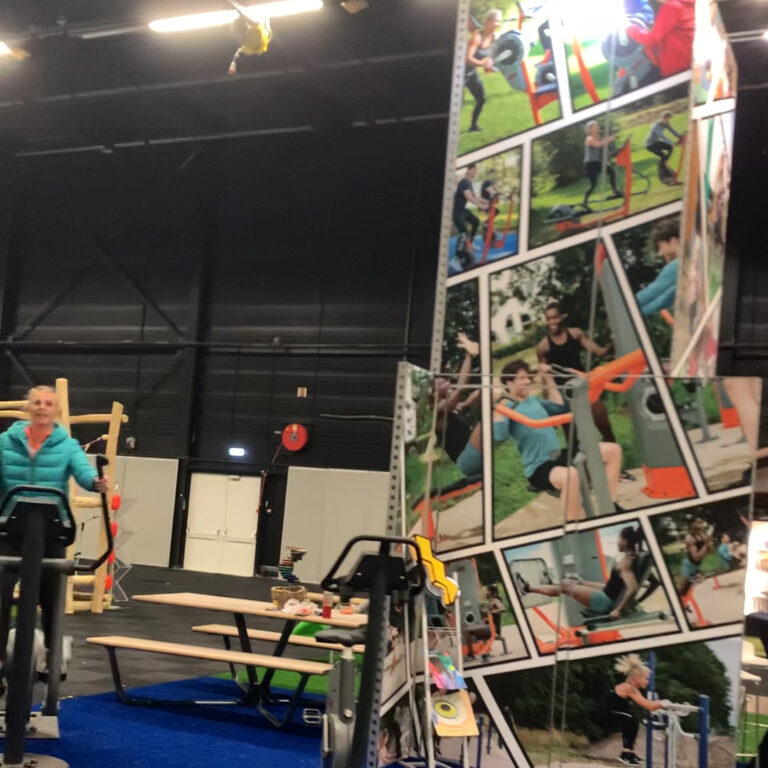
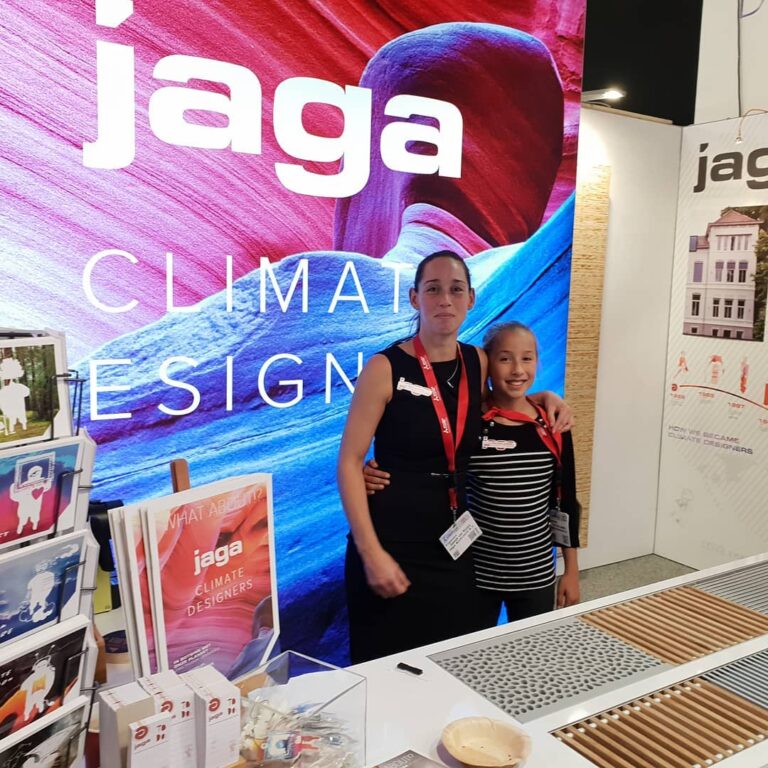
It was also at Adversitement where I organised my first trade fair participation, and I approached it the way I would approach every event after it: as one story, told by everyone involved. That meant thinking far beyond the stand design. Yes, there was the stand itself, the flyers, and the giveaways with a dedicated landing page to capture leads. But what mattered just as much was what happened in the aisle. We developed a script for the team: how to approach people who slowed down, how to read interest, how to guide a curious visitor toward the right expert without making it feel like a sales trap. Everyone knew their role, everyone told the same story, and nobody winged it.
The follow-up was just as deliberate. Marketing and sales worked in tandem; warm leads went to sales with context, colder contacts stayed with marketing for nurturing. Nothing fell through the cracks because we had agreed in advance on who owned what. I have organised many events and trade fair participations since then. The tools have changed, the budgets have varied, the industries have been completely different. But the principle has never changed: a trade fair is not a stand, it is an experience with a beginning, a middle, and an end. Get all three right, and it works.
What the digital pioneers taught me
That experience gave me a perspective that has stayed with me ever since. I learned to think in campaigns and channels before most businesses had figured out what a channel strategy even meant. I learned that digital and print are not opposites; they are different tools for the same job. And I learned that the best marketing, whether it lives online or on paper, always starts with a clear idea and a strong visual identity.
One thing from that period still stands out. I designed the logo for the company, and they are still using that today! There is something quietly satisfying about that; a piece of work from the early days of my career that has outlasted job titles, rebrands, and more than two decades of industry change. Good design, it turns out, has a long shelf life.
That lesson has never gone out of date. And unlike the data we were collecting, it has no expiry.